The short answer: what the law actually says
If we are asking, is it legal to remove an asbestos garage roof yourself in Scotland, the blunt answer is: sometimes, but it is rarely wise and often more expensive and stressful in the long run.
Scottish law allows some lower risk asbestos work to be carried out by non‑licensed people, including homeowners. However, that is only if:
- the material is firmly bonded, not damaged and not likely to release fibres
- the work is infrequent and of short duration
- we follow strict safety and waste disposal rules
Old garage roofs are usually asbestos cement sheets. On paper, these often sit in the “non‑licensed” category. In practice, age, weathering, cracks and previous DIY fixes can push them into a much higher risk bracket.
So while it can be legal, we need to look closely at three things before making any decision: the type and condition of the asbestos, the work we plan to do, and the legal responsibilities we carry if anything goes wrong.
Understanding asbestos garage roofs in Scotland
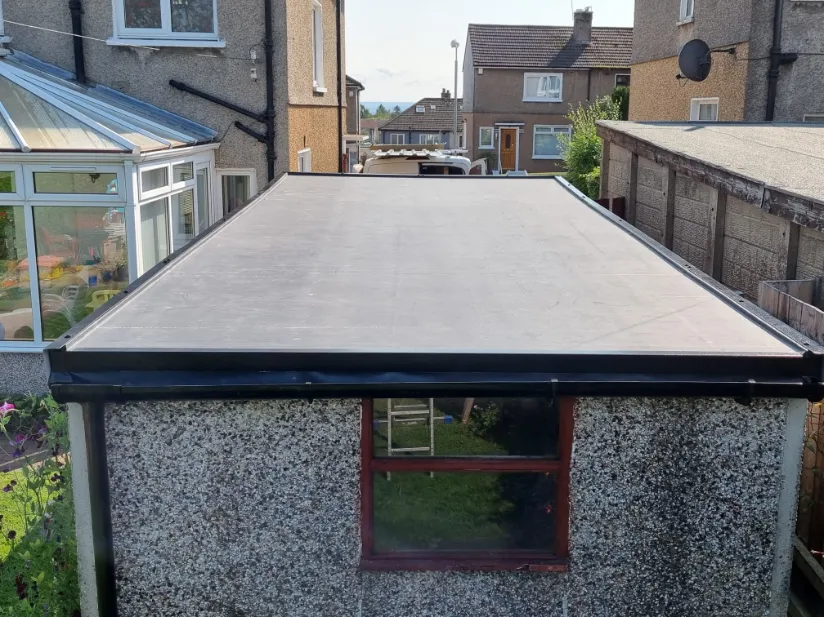
Across Scotland, most asbestos garage roofs were installed between the 1950s and late 1990s. We still find them on:
- detached single garages
- prefabricated concrete garages
- outbuildings and workshops
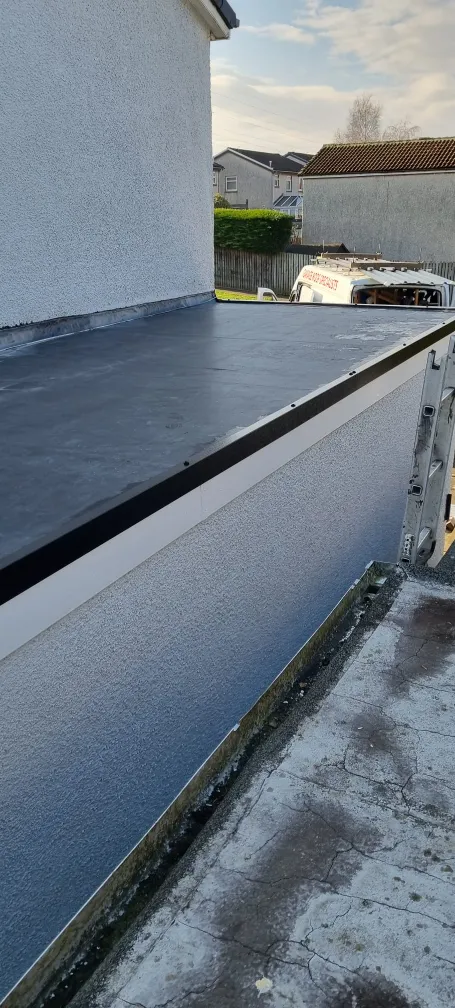
- lean‑to carports and small flat roofs
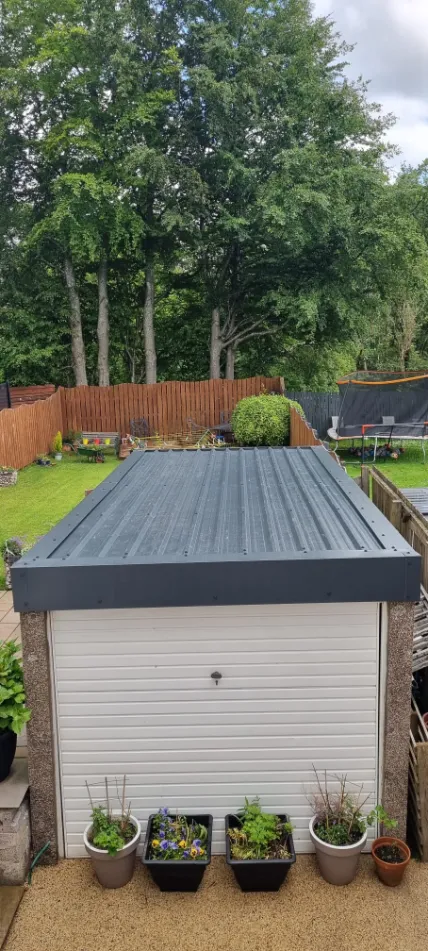
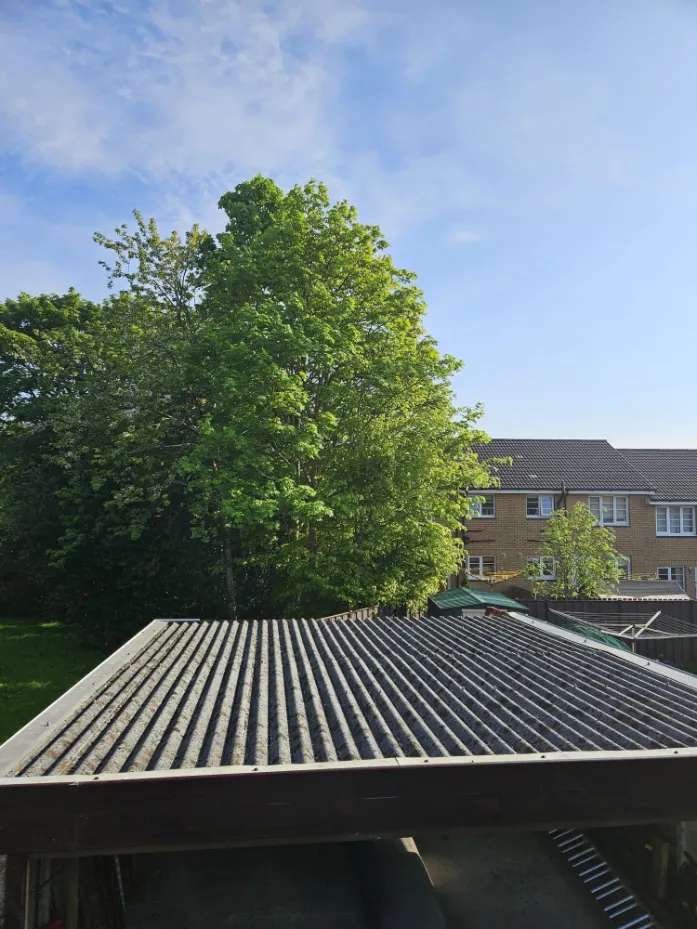
These roofs are usually made from corrugated asbestos cement sheets. The asbestos fibres are locked into a cement matrix, which makes them less likely to release fibres than soft, crumbly insulation boards or pipe lagging. This is why they sit in the “lower risk” category compared to other asbestos products.
However, three factors change that risk:
-
Age and weathering
Decades of Scottish rain, frost and UV light break down the cement, exposing fibres at the surface. -
Damage
Cracks, broken edges or previous drilled fixings all increase fibre release when disturbed. -
How we work on it
Removing full sheets carefully is one thing. Smashing them up with a hammer is another. The material and the method both matter.
We should always assume any cement roof installed before 2000 may contain asbestos until we have evidence to the contrary.
The legal framework in Scotland
Asbestos is controlled across Great Britain by the Control of Asbestos Regulations 2012. Those regulations apply in Scotland too and set out when work must be done by a licensed contractor and what anyone handling asbestos must do to keep people safe.
Key points for homeowners are:
- Some work with asbestos cement can be non‑licensed if risks are low.
- Even non‑licensed work must follow strict control measures: minimising dust, using suitable PPE and preventing exposure to anyone nearby.
- All asbestos waste is hazardous waste and must go to a licensed facility under Scottish Environment Protection Agency, SEPA, rules.
We also face wider legal duties. If we expose neighbours or visiting tradespeople to asbestos fibres, we may breach health and safety and environmental protection laws, and we could be held responsible for any resulting harm.
So the law does not only care about whether we are allowed to touch the material. It cares about how we handle, transport and dispose of it, and who we might put at risk along the way.
When DIY removal is technically allowed
There are circumstances where a Scottish homeowner can legally remove their own asbestos cement garage roof without using a licensed asbestos contractor.
It is more likely to be legally acceptable if:
- the sheets are asbestos cement, not softer insulating materials
- they are in good condition, with no major cracks, breaks or delamination
- the work is short in duration and done by a small number of people
- we can remove the sheets whole, not broken into pieces
- we can double wrap and label the waste correctly and take it to an authorised site
Even then, there are conditions. Before we start any DIY work with asbestos cement we should:
- Confirm the material type, ideally with a laboratory test or survey.
- Plan the method of work in detail, including how to reduce breakage and dust.
- Arrange suitable PPE and RPE, for example disposable coveralls and an appropriate mask.
- Plan how to segregate the area and protect neighbours and family members.
- Check how our local council handles asbestos waste from householders and which site will accept it.
If we cannot tick all of those boxes, we are quickly moving out of “technically allowed” and into “legally risky”.
When DIY removal becomes illegal or unsafe
The same regulations that allow limited DIY work also draw clear lines around what must not be done by untrained people.
DIY removal is not appropriate, and may well be illegal, if:
- the material is not asbestos cement, for example if it is asbestos insulating board or sprayed coating
- the roof is heavily damaged, flaking, or already shedding material
- we would need to cut, grind or break the sheets to get them down
- the work will generate significant dust or last for extended periods
- other people, including neighbours or passing members of the public, could be exposed
In those situations, the work may be either:
- Notifiable non‑licensed work, which still needs specialist controls and notification to the regulator, or
- Licensed work, which only an HSE licensed asbestos contractor is allowed to carry out
If we go ahead regardless, we risk:
- contaminating our home, garden and belongings with asbestos dust
- spreading fibres to neighbours and public areas
- investigatory and enforcement action if anyone reports unsafe work
- higher clean‑up and demolition costs later to fix a contaminated site
So the line between “allowed” and “not allowed” is less about who owns the garage, and far more about the nature of the material and the exposure risk created.
Scottish rules on asbestos waste and SEPA
Even if the removal itself falls within non‑licensed work, every scrap of asbestos we generate becomes hazardous waste. This is where SEPA rules come in.
In Scotland:
- Asbestos waste must be double bagged or wrapped, clearly labelled and kept secure.
- We cannot put it in normal household bins or skips.
- It must go to a licensed waste facility that is authorised to accept asbestos.
- Business waste and household waste are treated differently, with tighter controls on business waste.
Many local authorities will accept small amounts of household asbestos waste if it is properly packaged and booked in advance. Each council sets its own rules and limits, and some require pre‑approval.
If we try to:
- hide asbestos in general waste
- burn it
- dump it on vacant land or in countryside locations
we are committing a serious environmental offence, not simply breaking a guideline. SEPA and local authorities can investigate, issue fines and pursue prosecution.
Understanding and following waste rules is just as important as the removal method on the day. From a legal point of view, the job is not finished until the waste is accepted at a licensed site.
Practical and health risks of DIY removal
Legal permission is only part of the story. We also need to weigh up the practical and health risks of doing the work ourselves.
Health risks
Asbestos‑related diseases develop many years after exposure. A short project on a garage roof may feel minor, but if we inhale high levels of fibres it can add to our lifetime risk.
DIY removal often goes wrong in predictable ways:
- sheets crack unexpectedly while being unscrewed
- people underestimate wind and weather, which spreads dust
- face masks are not fitted correctly, so they leak around the edges
- overalls and gloves are taken off carelessly, spreading dust to cars and homes
We cannot see asbestos fibres in the air. If we can see dust, the fibre level is already too high.
Practical risks
Garage roofs are also working at height on fragile materials. Alongside asbestos, we are dealing with:
- the risk of falls from ladders or the roof itself
- sharp edges and fixings
- the weight and awkward shape of full roof sheets
- handling heavy, wrapped waste in and out of vehicles
Combine that with the need to work slowly and carefully to avoid breakage, and we can end up in the worst of both worlds: high risk and low control.
Our legal responsibilities as homeowners
In Scotland, owning the garage means we carry the responsibility for what happens on that site. That includes:
- protecting anyone who helps us informally, such as friends or family
- making sure tradespeople are not exposed to disturbance from previous DIY work
- preventing contamination from drifting onto neighbouring properties or public land
- complying with planning rules if we change the structure or appearance of the building
If we sell the property, we may also need to disclose the presence or removal of asbestos in the home report or other documents. Poor DIY work can create long term questions about the safety and condition of the structure.
We cannot pass this responsibility on simply because we did not realise the full risk at the time. The law expects us to take reasonable steps to understand and manage asbestos hazards.
How professional removal works
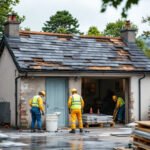
When we bring in a specialist contractor, the process looks very different from a typical DIY job. A compliant asbestos removal company will:
-
Survey and identify
Confirm whether the roof contains asbestos and what type it is. -
Plan the method
Produce a method statement dealing with roof access, sheet removal, dust suppression and waste handling. -
Control the area
Set up exclusion zones, warning signs and, where needed, barriers to keep others away. -
Use trained staff and proper kit
Staff wear suitable RPE, PPE and use tools that minimise fibre release. Sheets are removed whole wherever possible. -
Handle waste lawfully
Waste is wrapped, labelled and transported by registered carriers to licensed disposal sites, with correct paperwork. -
Clean and inspect
The area is cleaned down, and visual checks confirm that there is no visible debris or contamination left on site.
This level of control is what Scottish regulators expect from anyone working with asbestos, especially when removal sits near the line between non‑licensed and notifiable or licensed work.
Why many garages are better replaced than repaired
Once we discover an asbestos garage roof, we essentially have three options.
- Leave it in place and manage it if it is sound, and we can tolerate the risk.
- Patch or repair it, which often involves disturbing the material.
- Remove and replace it, which deals with the asbestos and upgrades the roof.
In our experience, repair work on old asbestos cement roofs usually ends up costing more than it first appears. We pay for:
- specialist fixings and coatings
- repeated call outs for new leaks and damage
- workarounds because no one wants to drill or cut the material
By contrast, a properly planned removal and replacement gives us:
- a non‑asbestos roof that meets current standards
- better insulation and weather performance
- a simpler story when we come to sell or insure the property
If we are weighing up options, our complete guide to asbestos garage roof replacement in scotland 2026 walks through the process, timescales and costs in more depth.
Deciding what to do next
So, is it legal to remove an asbestos garage roof yourself in Scotland? Sometimes yes, in narrow circumstances, with careful controls and correct waste handling. The law allows some homeowner work on asbestos cement, but it does not remove our duty to protect people and the environment.
For most of us, the more important question is different: what is the safest, most reliable and least stressful way to deal with this roof over the long term?
We believe that answer usually involves:
- confirming whether asbestos is present, rather than guessing
- getting clear, written advice on the condition and risk level
- weighing the total cost of DIY, including time, equipment and disposal
- comparing that honestly with a quote from a compliant, insured specialist
Once we see the full picture, we can choose with confidence.