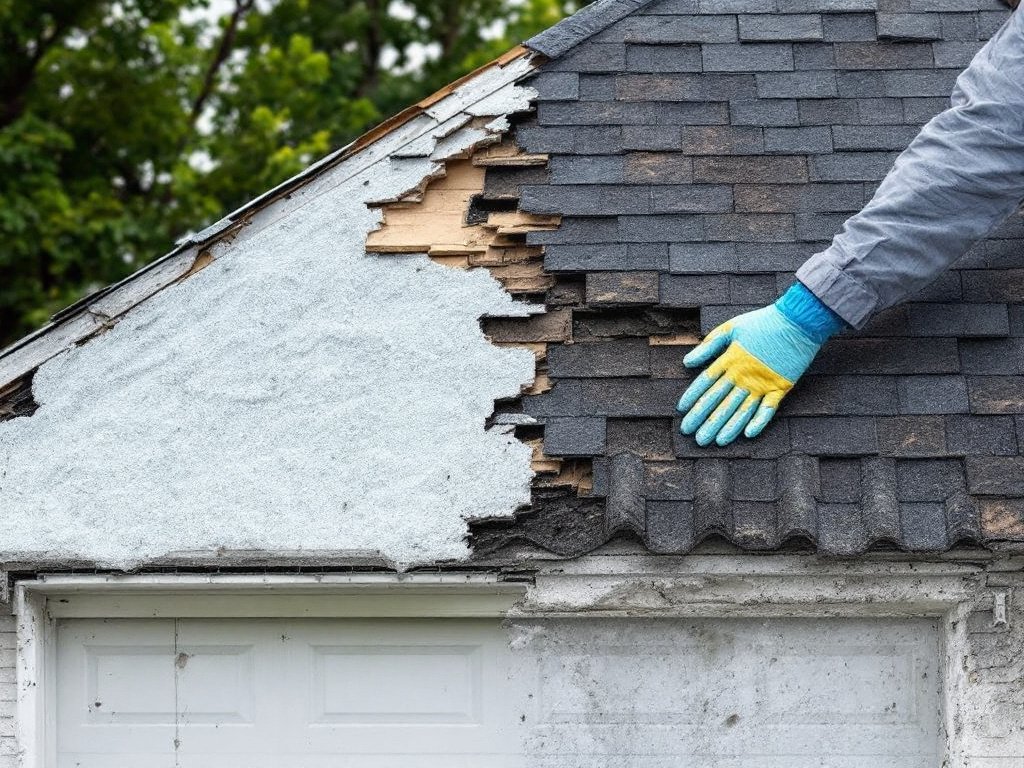
Why asbestos garage roofs are a concern in Scotland
When homeowners ask us, “what is the best roof to replace an asbestos garage roof?”, they are usually worried about three things at once: health, legality and long term value. In Scotland, where many garages were built between the 1960s and 1990s, asbestos cement sheets are still very common on single garages, double garages and outbuildings.
Asbestos cement is not the most dangerous form of asbestos, but once it starts to crack, weather, or get drilled and disturbed, it becomes a real risk. Fibres can be released into the air, and that is when health concerns begin. On top of that, future buyers and surveyors are increasingly cautious, so an old asbestos roof can drag down a sale or trigger expensive conditions.
We see a clear pattern. If the roof is still structurally sound and undamaged, monitoring and leaving it in place can be an option. If it is leaking, flaking, sagging or damaged, then replacement is the sensible move. The next question is what you put back on top, and that is where our experience with Scottish weather really matters.
How to tell if your garage roof contains asbestos
Most Scottish homeowners do not have lab reports lying around, they just see old grey sheets and wonder. We always start with simple, safe checks that can guide what happens next.
Visual clues you can safely look for
Typical asbestos cement garage roofs share a few common features that you can often spot from ground level:
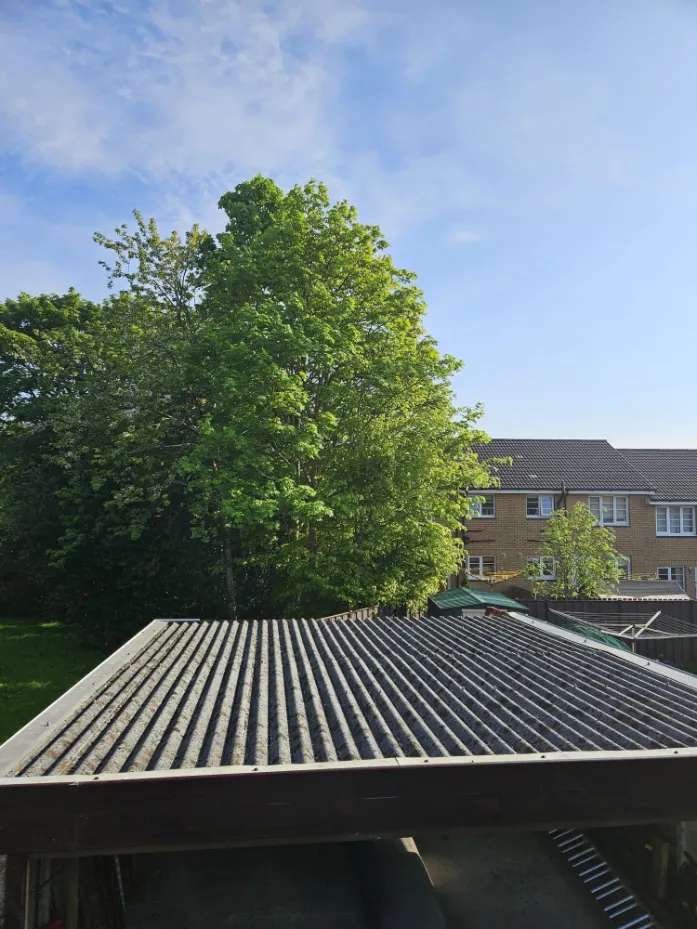
- Corrugated grey or dull off white sheets, usually 6 to 10 millimetres thick
- A rough, slightly textured surface rather than a smooth finish
- Moss and lichen growing easily on the sheets
- Sheets that were clearly installed decades ago, often with rusted hook bolts
Asbestos free fibre cement can look similar, so appearance alone is not enough to confirm anything. That is why we treat suspicious roofs cautiously until they are properly identified.
When to bring in a specialist
If your garage roof is older than the late 1990s, and you suspect asbestos, it is safest to assume it may be present until tested. In practice, that means:
- Do not drill into it to fit lights, cameras or a new opener
- Do not jet wash or scrape it
- Do not break sheets yourself to “tidy up”
A trained asbestos surveyor or a competent contractor can take a small sample and send it to a UKAS accredited lab for analysis. For many homeowners, this is the cleanest way to remove doubt before planning a replacement. We arrange this step routinely as part of our survey process for asbestos garage roof replacement projects.
For a fuller walkthrough of checks, testing and regulations, our complete guide to asbestos garage roof replacement in scotland 2026 goes into more detail.
Legal and safety rules for asbestos roof removal in Scotland
Once we know a garage roof contains asbestos, the next step is to plan safe removal. The law in Scotland follows UK wide asbestos regulations, and while asbestos cement is often classed as lower risk than insulation board or lagging, it is still tightly controlled.
Who is allowed to remove an asbestos garage roof
In many domestic cases, removal of asbestos cement sheets falls under non licensed work. That does not mean casual DIY is a good idea. Proper removal requires:
- Correct protective equipment
- Controlled handling so sheets stay intact
- Sealed wrapping and labelled waste
- Use of licensed asbestos waste transfer facilities
We strongly recommend using a contractor who works with asbestos cement garage roofs regularly and who can show training records, method statements and waste transfer documentation. It protects your health now, and it also provides a paper trail for future buyers and solicitors.
Disposal, documentation and future resale
A good removal plan looks beyond the day the sheets come down. We always:
- Photograph the roof before and after
- Keep lab reports where testing was done
- Provide copies of waste consignment notes for your records
This documentation can be valuable if you sell the property in future, or if a buyer’s survey flags historic asbestos. You are able to show that the asbestos garage roof was professionally removed and disposed of in line with regulations, which reduces friction later.
Key factors when choosing a replacement roof
Once asbestos is safely out of the picture, we help clients decide what sort of roof will work best for their garage and their budget. When we answer “what is the best roof to replace an asbestos garage roof?” we do not mean just the first few winters, we are looking at how the structure will perform over 20 years or more.
Scottish climate and exposure
In Scotland, wind, driving rain and frequent freeze thaw cycles punish poor quality roofs. We routinely work on sites that face:
- Salt laden coastal air that can corrode cheap metal
- Exposed hilltop locations with strong gusts
- Urban sites with falling debris from trees and neighbouring buildings
Any replacement we recommend has to cope with high wind uplift, heavy rain and temperature swings without constant patch repairs.
What you use the garage for
How you use the space under the roof changes the specification. We see three main patterns:
- Simple storage, where basic weather tightness is the priority
- Workshop or hobby space, where condensation and heat loss matter more
- Integral or attached garages, where appearance and energy efficiency are important
A lightly used storage garage might be fine with a single skin metal system. A home workshop where you store tools, musical instruments or classic cars needs better thermal performance and condensation control.
Budget, lifespan and maintenance
There is a balance to strike between up front cost and long term value. As a rough guide:
- Lowest cost roofs tend to have shorter warranties and need more maintenance
- Mid range insulated systems usually offer the best balance of comfort, durability and cost
- Premium systems can approach house roof performance, which is ideal for high value properties
We always walk through the numbers in plain language so you can see not only what fits your budget now, but also what each option looks like over a decade of Scottish weather.
Comparing popular garage roof replacement options
Most of the replacement roofs we fit on ex asbestos garages fall into four main categories. Each has strengths and limitations. The table below gives a high level comparison, then we break each option down in more detail.
| Roof type | Typical lifespan in Scotland | Weather resistance | Condensation control | Up front cost | Maintenance level |
|---|---|---|---|---|---|
| Single skin metal sheets | 15–25 years | High | Low | Low | Low–medium |
| Insulated composite panels | 25–40 years | Very high | Very high | Medium–high | Low |
| GRP (fibreglass) | 20–30 years | High if well built | Medium | Medium | Low–medium |
| Felt on boards | 10–20 years | Medium | Low–medium | Low–medium | Medium–high |
Metal garage roofs
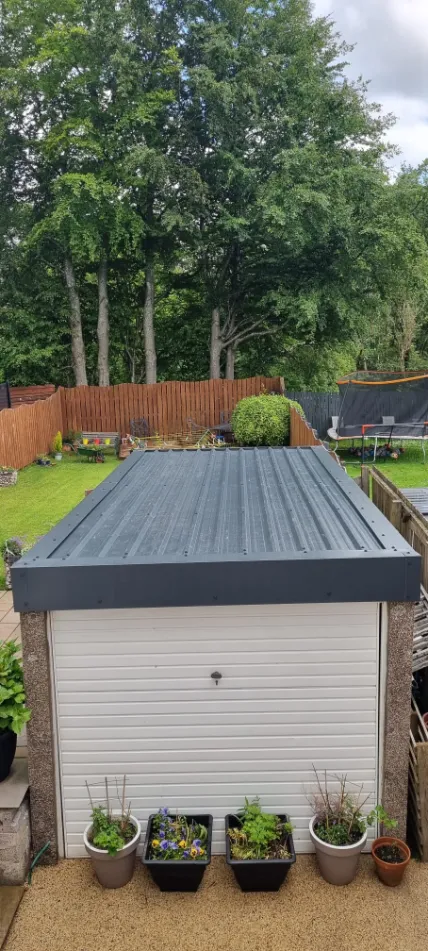
Metal roofs are one of the most common upgrades once asbestos sheets come off, largely because they are quick to install and handle Scottish rain and wind very well.
Pros of metal roofs
We like metal for several reasons:
- Excellent weather resistance when properly detailed
- Lightweight, so they suit existing garage structures
- Wide choice of colours and finishes
- Quick installation, which keeps labour costs sensible
Modern plastisol coated steel sheets are a world away from bare metal of the past. Done correctly, a simple metal replacement is a strong step up from an ageing asbestos cement roof.
Cons and limitations
The main drawback is condensation. In an uninsulated metal roof, warm moist air inside the garage will hit the cold underside of the sheet and condense. Over time, that can drip onto cars, tools and stored items.
We can reduce this with anti condensation fleece on the underside of the sheets, trickle ventilation and good detailing, but a single skin metal roof will never be as comfortable as a fully insulated system. Noise from heavy rain and hail is also higher than on insulated options.
Insulated roof panels
Insulated composite roof panels are our preferred solution for many garages in Scotland, especially where owners want a long term fix with better comfort.
How insulated panels work
These systems are made up of two metal skins with a rigid insulation core, usually polyurethane or PIR. They provide:
- Weatherproof outer surface
- Built in insulation layer
- Clean internal ceiling finish
The panels lock together and are fixed to the supporting structure in long runs, which speeds up installation and reduces the number of joints where leaks could start.
Benefits in Scottish conditions
For our climate, insulated panels tick a lot of boxes:
- Sharp reduction in condensation risk
- Warmer in winter, cooler in summer
- Very good resistance to wind uplift and driving rain
- Long manufacturer warranties when installed correctly
We often find that garages with insulated roofs are usable for far more of the year as workshops, gyms or hobby spaces. They are also kinder to anything sensitive you store in there, from paperwork to electronics.
The main trade off is cost, which is higher than simple single skin metal, but for many Scottish homeowners the extra comfort and lifespan justify the difference.
GRP (fibreglass) garage roofs
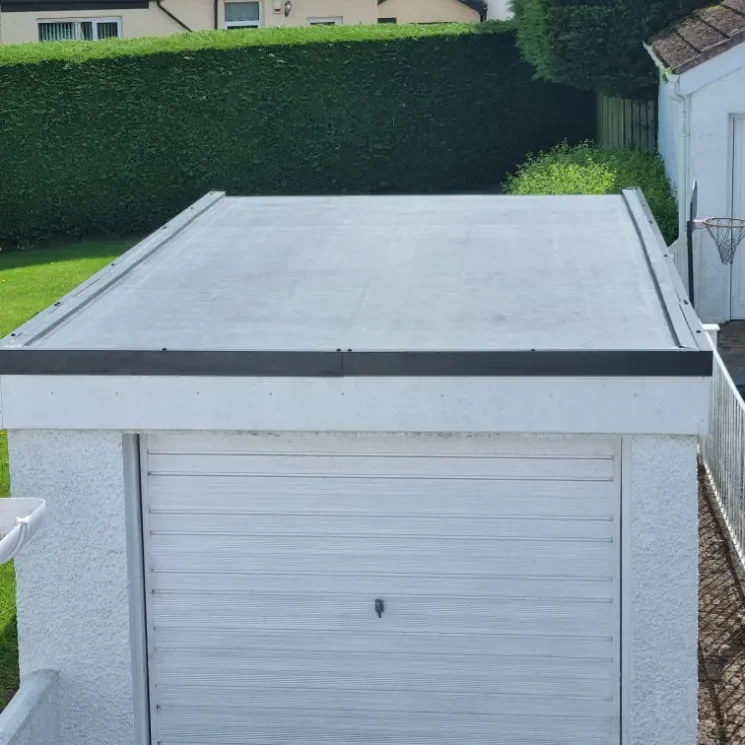
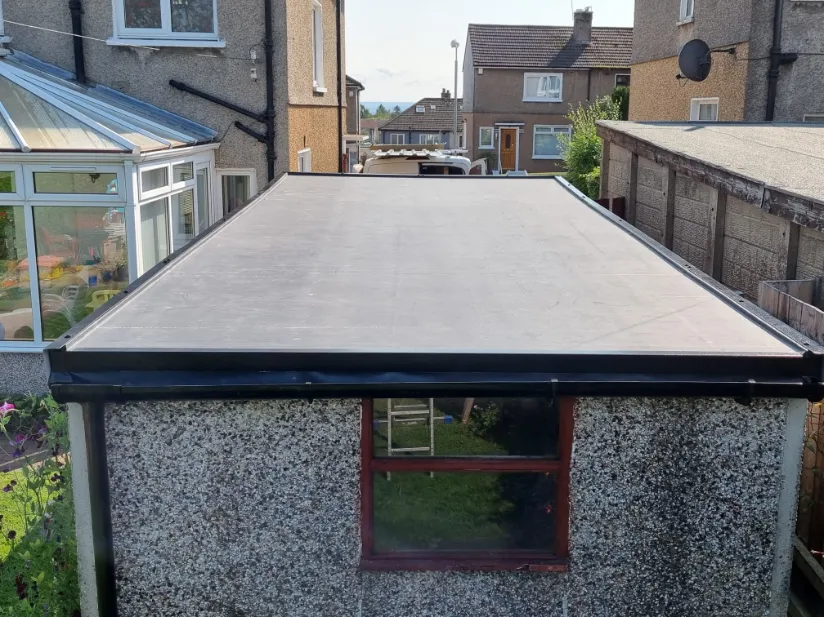
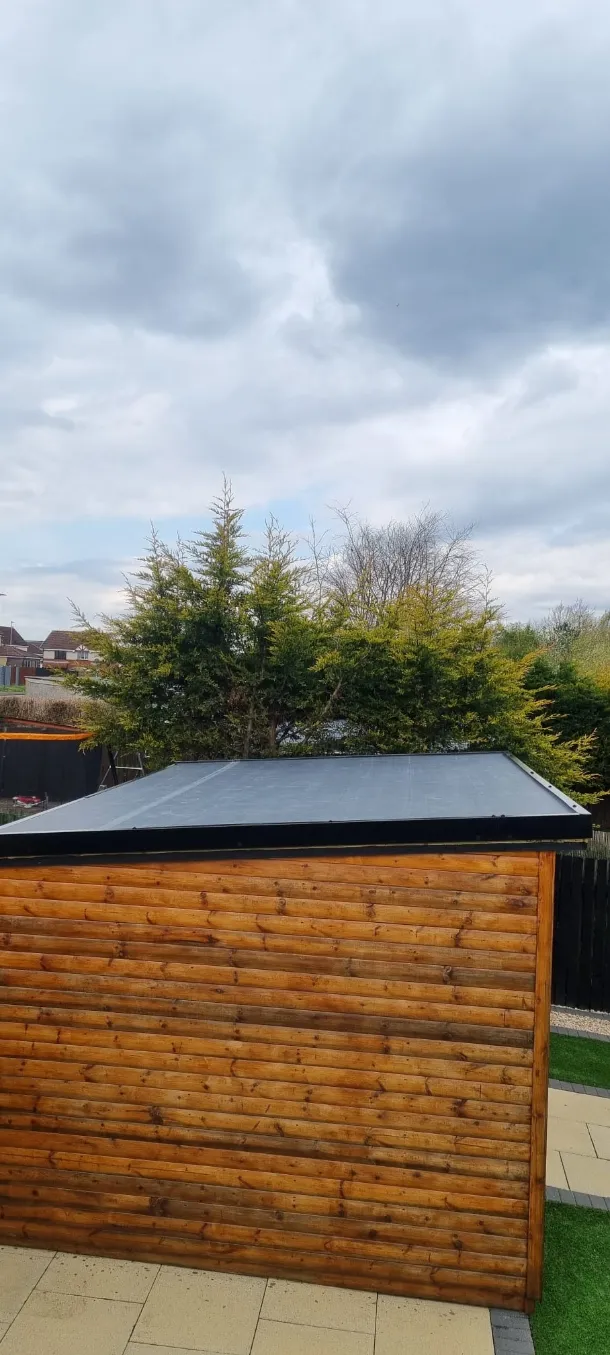
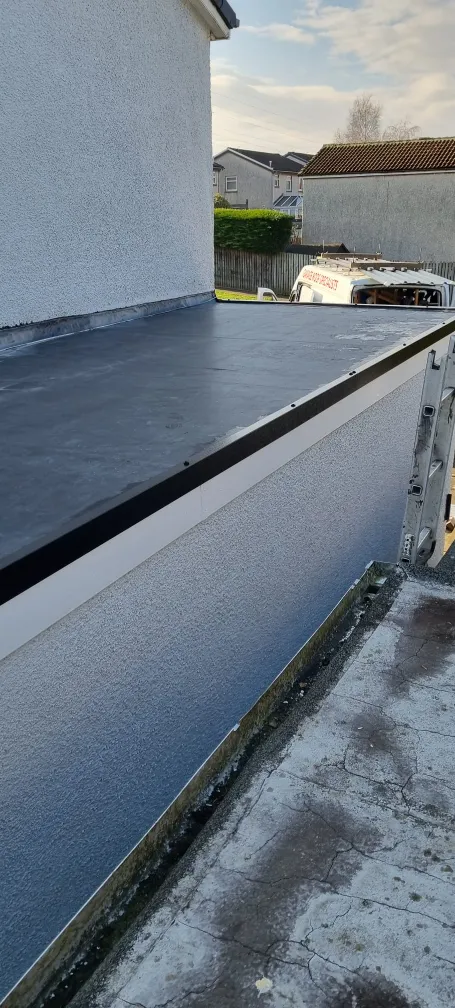
GRP, also known as fibreglass, is a popular flat and low pitch roof material. It is a liquid applied system that cures into a solid, joint free surface.
Where GRP works well
We see the best results with GRP where:
- The garage roof is a simple flat or near flat shape
- The decking underneath is new and properly installed
- Edges and upstands are detailed by experienced installers
A well built GRP roof can last 20 years or more, resists standing water and can be finished in a neat, modern colour.
Things to watch for
GRP is less forgiving of poor workmanship than metal or panels. Problems usually come from:
- Rushed preparation and damp boards
- Incorrect resin mix in cold conditions
- Lack of expansion joints on large roofs
In exposed Scottish locations, UV and temperature swings can cause cheaper systems to craze or crack over time. We only recommend GRP on suitable structures and when we know the detailing will be done to a high standard.
Felt roofs
Traditional felt roofs on timber boards were widely used as a quick fix once asbestos issues were first noticed. We still see them on garages where the owner opted for the lowest upfront price.
Why felt is less suitable for garages in Scotland
Felt systems have some clear weaknesses in our climate:
- Shorter lifespan, especially under pooling water
- Seams and joints are more vulnerable to wind and movement
- Easier to damage during maintenance or by falling debris
Modern torch on felts are better than older pour and roll systems, but they rarely match metal or insulated panels for overall durability in exposed Scottish locations. We rarely recommend felt as the first choice for asbestos garage roof replacements, except in very specific, sheltered situations or where budget is very restricted.
Our recommendation: best roof to replace an asbestos garage roof in Scotland
So, what is the best roof to replace an asbestos garage roof if you live in Scotland and want a long lasting, low hassle solution?
Based on the garages we have surveyed and replaced across the country, insulated composite roof panels are usually the best long term option. They combine:
- Strong weather performance in high wind and heavy rain
- Built in insulation that reduces condensation and heat loss
- Clean internal appearance that suits attached or integral garages
- Long design life and warranties when installed correctly
For garages used only as basic storage in less exposed locations, a well specified single skin metal roof with anti condensation treatment and good ventilation can be a solid, cost effective choice.
We see GRP as a good solution for specific flat or low slope roofs where the structure and detailing are suitable. Felt, by contrast, is generally our last resort option for asbestos garage roof replacement, mainly due to shorter life and higher risk of future leaks.
What to expect during a replacement project
Homeowners are often surprised at how quickly an old asbestos garage roof can be removed and replaced once the planning is in place.
Typical steps we follow
Our process usually looks like this:
- Initial survey to confirm roof type, condition and structure
- Arrange testing where asbestos is suspected but not confirmed
- Prepare method statement, risk assessment and quotation
- Book scaffold or access equipment if needed
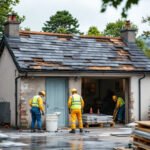
- Remove asbestos sheets under controlled conditions
- Wrap and transport asbestos waste to a licensed facility
- Inspect and reinforce or replace timbers if required
- Install the chosen replacement roof system
- Add flashings, trims, gutters and ventilation as needed
- Final tidy, photos and handover of documentation
For a straightforward single garage, the main site work is often completed in one to two days, weather and access permitting.
Minimising disruption and mess
We know garages usually contain a mix of valuable and sentimental items. Before work begins we agree:
- What you will move and what we will protect
- How we will manage dust and debris
- Safe access routes to and from the site
Our teams work methodically to keep disruption low, and we leave the site clean and clear, with waste removed and the new roof sealed against the elements.
When to repair and when to replace
Not every asbestos roof needs to come off immediately. In some situations, a repair and monitor approach makes sense, especially where budgets are tight.
Signs that replacement is the better choice
We usually recommend full replacement if we see:
- Widespread cracking or broken sheets
- Frequent leaks despite patch repairs
- Noticeable sagging between supports
- Impact damage from branches or objects
- Plans to convert or upgrade the garage space
In these cases, spending more on another short term repair rarely makes sense. The underlying material is near the end of its life, and a planned replacement lets you control cost and timing instead of reacting to the next failure.
Cases where a short term repair can work
If the asbestos cement sheets are otherwise in good condition and damage is localised, a carefully managed repair can extend life for a few years. Even then, we tend to frame it as buying time while you plan a full replacement, rather than as a permanent solution.
Frequently asked questions
1. Do I have to remove an asbestos garage roof if it is not leaking?
No, there is no automatic legal requirement to remove asbestos cement roofs in good condition on domestic garages. If the sheets are intact, not flaking, and unlikely to be disturbed, monitoring and leaving them in place can be acceptable. However, if you plan major work, or if you are concerned about future resale, proactive replacement can be a sensible decision.
2. Can I remove an asbestos garage roof myself in Scotland?
In some cases, domestic owners are allowed to remove small amounts of asbestos cement themselves, but we do not recommend it. The health risks from incorrect handling and the need to dispose of the waste at licensed facilities make professional removal the safer and more practical route. A specialist will also provide the paperwork you may need for surveys and conveyancing in future.
3. How long does a new garage roof last after asbestos removal?
It depends on the system you choose and the exposure of your site. As a broad guide, single skin metal roofs usually last 15 to 25 years, insulated composite panels 25 to 40 years, GRP systems 20 to 30 years and felt roofs 10 to 20 years. Good detailing, regular gutter cleaning and prompt attention to minor issues all help extend the life of any roof.
4. Will a new roof reduce condensation in my garage?
If condensation is a problem now, the type of replacement you choose matters. Insulated composite panels give the best improvement because they keep the inner surface warmer and include a vapour barrier. Single skin metal can be improved with anti condensation backing and ventilation, but some risk of drips will remain in certain conditions. We always discuss condensation risks and mitigation as part of our recommendations.
5. How do I choose between metal, insulated panels, GRP and felt for my garage?
We start with three questions: how exposed is your garage to the weather, what do you use it for and what is your realistic budget. For most Scottish homeowners who want a long lasting, low maintenance solution, insulated composite panels are our first choice. For simple storage where budget is tight, single skin metal can work well. GRP and felt tend to be more niche options, suitable on specific structures or where there are constraints on appearance or pitch.
If you are weighing up options for your own property, we are happy to walk through the choices in plain terms and suggest the most durable, cost effective way to replace your asbestos garage roof for Scottish conditions.